
How to Determine Farmland Lease Rates


Determining farmland lease rates starts with two things: reliable market data and an honest assessment of your land's specific characteristics. USDA's National Agricultural Statistics Service publishes county-level cash rent averages annually, and most Midwestern land-grant universities publish their own state-specific surveys. Together, these give you a defensible starting range before you ever sit down with a tenant.
From there, the rate you can realistically charge depends on your land type, soil productivity, irrigation infrastructure, and the condition of any improvements like fencing, water sources, and pasture divisions. Get the combination right and you protect your land's long-term value while generating competitive income. Set it too low and you leave money on the table. Set it too high and you struggle to find reliable tenants.
What is the Going Rate for Leased Farmland?
The national going rate for leased farmland is $161/acre on average. The property's features are the biggest driver of lease rates. But before you factor in your land's specific features, you need a baseline. Two of the most reliable sources for farmland lease rates are free.
USDA NASS Cash Rent Survey
Each year, the USDA's National Agricultural Statistics Service (NASS) surveys farmers and landowners nationwide to compile average cash rental rates by county. The resulting dataset breaks down rates by state and county for irrigated cropland, non-irrigated cropland, and pastureland. It's publicly available at no cost and updated annually, making it one of the most reliable starting points for any lease negotiation. To find current rates for your county, visit the USDA NASS Cash Rents by County page.
To give you a sense of scale: according to USDA's 2025 data, average U.S. non-irrigated cropland rents sit around $147 per acre, while irrigated cropland averages $244 per acre. In the Corn Belt, top-producing counties in Illinois, Iowa, and Indiana regularly command $250–$325+ per acre for prime non-irrigated ground.
Farmland Lease Rates by State: 2025 Averages
State | USDA NASS 2025 Cash Rent Average Per Acre |
Alabama | $80.5 |
Arizona | $334 |
Arkansas | $127 |
California | $346 |
Colorado | $87 |
Connecticut | Not specified |
Delaware | $129 |
Florida | $40 |
Georgia | $153 |
Hawaii | $295 |
Idaho | $211 |
Illinois | $264 |
Indiana | $227 |
Iowa | $274 |
Kansas | $74.5 |
Kentucky | $167 |
Louisiana | $111 |
Maine | $80.2 |
Maryland | $128 |
Massachusetts | $111 |
Michigan | $151 |
Minnesota | $200 |
Mississippi | $149 |
Missouri | $157 |
Montana | $39.5 |
Nebraska | $226 |
Nevada | $160 |
New Hampshire | Not specified |
New Jersey | $85.5 |
New Mexico | $75.5 |
New York | $83.5 |
North Carolina | $106 |
North Dakota | $84 |
Ohio | $184 |
Oklahoma | $40 |
Oregon | $183 |
Pennsylvania | $110 |
South Carolina | $55.5 |
South Dakota | $138 |
Tennessee | $118 |
Texas | $49 |
Utah | $93 |
Vermont | Not specified |
Virginia | $70 |
Washington | $259 |
West Virginia | $44.5 |
Wisconsin | $166 |
Wyoming | $53.5 |
Land-Grant University Extension Programs
Most Midwestern states have land-grant universities (like Colorado State University, Purdue, Iowa State, University of Nebraska-Lincoln) with agricultural extension programs that compile and publish annual farmland rental rate surveys specific to their state, often broken down by crop reporting district or county. These surveys tend to capture more granular, localized data than the national USDA figures and are regularly updated to reflect current market conditions.
Shannon Schlachter, a land professional with National Land Realty, highlighted this resource in our recent webinar about farmland leasing - and it's one landowners frequently overlook.
Use both sources together to bracket a reasonable range for your specific geography before layering in your property's unique characteristics.
The Biggest Driver of Farmland Lease Rates: Land Type
The single biggest driver of farmland lease rates is what kind of land you're leasing and its unique features. The three broad categories of irrigated cropland, dryland, and pastureland carry very different per-acre values.
Irrigated Cropland
Irrigated ground commands the highest lease rates. When a tenant can control water delivery - whether through center pivot systems, flood irrigation, or drip systems - they can manage crop stress, reduce yield variability, and often produce higher-value specialty crops. That reliability and productivity premium gets reflected directly in the rent. Nationally, irrigated cropland averages roughly $97 more per acre than non-irrigated equivalents, and in some Midwestern irrigation corridors, the gap is even wider.
If your land has an existing irrigation system in good working order, that infrastructure alone can significantly elevate what the market will bear.
Dryland (Non-Irrigated) Cropland
Dryland cropland lease rates are driven primarily by soil productivity. In the Midwest, this is often expressed through soil productivity rankings, which are scoring systems that measure a soil's capacity to grow crops under average management. The better your soil, the higher your lease rate. Prime, well-drained loam soils in central Illinois or northwest Iowa will command dramatically higher rents than coarser or poorly drained soils even in neighboring counties.
Soil type also determines which crops can realistically be grown, which affects what a tenant can afford to pay. Corn and soybean ground in the Corn Belt typically generates the highest rents for dryland operations.
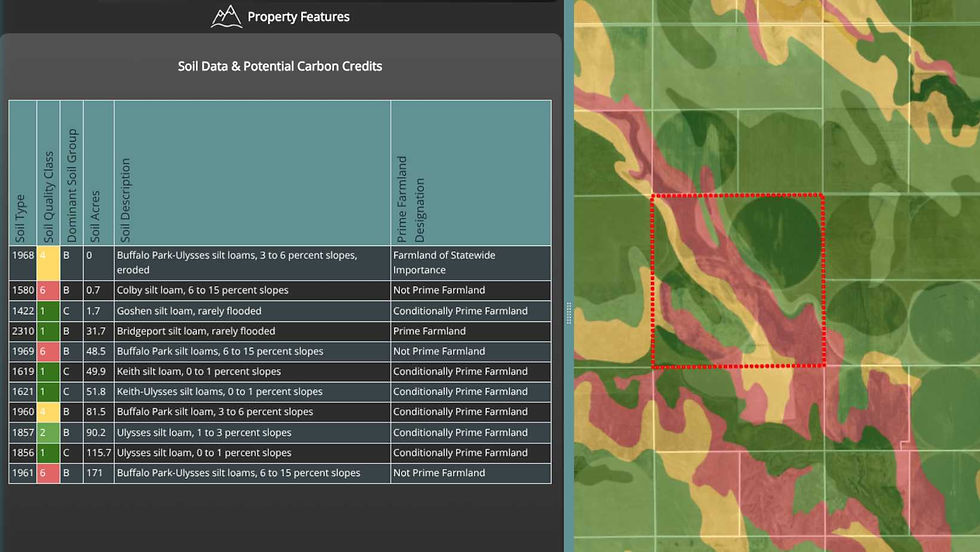
You can see and parcel’s soil types with a free LandApp Property Report. Whether you own land or are interested in leasing an agricultural property, LandApp’s Property Reports instantly show you what types of soil you’re working with. Simply find the parcel on our map to get your free report:
Grass / Pastureland
Pastureland is typically the lowest per-acre farmland lease category. The USDA data puts the national average for leased pastureland at around $16 per acre, but that number tells only part of the story. Pasture rent is heavily influenced by the quality of existing improvements, and this is where landowners often have more negotiating leverage than they realize.
Key improvements that affect grass lease rates include:
Water sources: The presence and reliability of stock ponds, tanks, or wells is critical. A pasture with water rights and multiple dependable water sources is worth meaningfully more than comparable acreage that's dry.
Fencing condition: Well-maintained perimeter and cross fencing reduces the tenant's operating cost and risk. Poor or missing fencing shifts that burden to the lessee and is reflected in lower offers.
Number of tanks and ponds: More watering locations support higher stocking rates, which directly affects how much production the tenant can generate per acre.
Divided pastures: Cross-fencing that enables rotational grazing increases carrying capacity and land health. Tenants running managed cattle grazing programs will pay more for this infrastructure.
Overall land condition: Pastures free of invasive species, brush encroachment, and noxious weeds are more productive and easier to manage. Land that requires significant remediation work will attract lower bids or offset lease offers.
Other Factors to Consider to Determine Farmland Lease Rates
Beyond land type, several additional variables influence what the market will support for your specific agricultural property.
Lease length and structure: Cash rent leases are the most common type of farmland lease in the Midwest, but crop share leases (where the landowner receives a percentage of the crop) are still used and can be advantageous when commodity prices are high. Multi-year leases with good tenants often trade a slight per-acre discount for the stability of a long-term relationship.
Type of operation: A farmer specializing in intensive vegetable production may be willing to pay a higher cash rent per acre than a producer growing row crops such as corn, wheat, or soybeans. In contrast, operations focused on grazing livestock typically pay the lowest rental rates.
Soil productivity: As mentioned above, states like Illinois, Iowa, and Indiana use formal productivity scoring systems. Knowing your ground's score gives you an objective anchor point in negotiations.
Commodity prices: Farmland lease rates are loosely correlated with commodity prices. When corn and soybean prices are strong, tenant farmers can afford to bid more aggressively for productive ground. Rate re-negotiations tied to market conditions are increasingly common.
Location and access: Proximity to grain elevators, livestock markets, and paved road access affects operational efficiency for the tenant. Difficult-to-access parcels or those requiring significant hauling distances may see lower offers.
Existing tenant relationships: Long-term tenants who have demonstrated good stewardship of the land represent real value. That relationship often justifies modest rate adjustments over time rather than chasing every uptick in the market.
Buildings and other infrastructure: Buildings generally increase both the risk and ownership costs for the landowner, which often results in higher rental rates. Likewise, features such as fencing and water access for grazing livestock can enhance the property's value and support higher rent.
How Do You Negotiate Farmland Rental Rates?
Once you've established a fair market range using USDA data, university extension surveys, and your land's features, the negotiation itself requires preparation, relationship awareness, and a clear sense of your limits.
First, be sure to come in with data - not just a number. The strongest negotiating position is one grounded in verifiable information. Bring your USDA county-level comps, state extension survey figures, and soil productivity index score if you have it. A tenant who pushes back on your rate will have a harder time arguing with county averages than with a number you can't substantiate.
Next, understand what the tenant values. A row crop farmer may care most about soil productivity and field accessibility; a cattle operator will focus on water availability and fencing conditions. Knowing what matters to your prospective tenant can reveal leverage you didn't know you had. For example, a pasture with strong water infrastructure and rotational fencing may justify a rate well above county average even if raw acreage numbers don't immediately show it.
Be transparent about limitations. Experienced tenants will walk the ground before signing. If there are drainage issues, invasive species, or deferred maintenance, trying to obscure them usually backfires. Acknowledging limitations upfront and adjusting terms accordingly builds trust and leads to more durable tenant relationships.
To negotiate farmland rental rates, you can use term length as a lever. A multi-year lease with a proven tenant at a slight discount to peak market rate often beats annual renegotiation at top dollar, because stability reduces vacancy risk and incentivizes the tenant to care for the land. With a new tenant, a shorter initial term with a renewal option gives you a cleaner exit if the relationship doesn't work out. Either way, consider building in a renegotiation clause tied to a specific trigger like USDA county average changes or commodity price thresholds so you're not locked below market if conditions shift.
Finally, know your walk-away number. Before any negotiation, decide the minimum rate you'll accept and why. Vacant ground has real carrying costs (taxes, liability, land condition), but leasing below what your asset warrants isn't the answer either. Knowing your floor keeps the conversation productive.
Should You Get Help? When to Bring in a Professional
Negotiating a farmland lease on your own is possible, especially if you've done it before and have an established tenant relationship. But for many landowners, particularly those new to leasing or dealing with a more complex arrangement, bringing in the right people can save you from costly mistakes and set the lease up for long-term success. The right advisors make the process smoother, the agreement stronger, and the outcome better for everyone involved.
An Attorney
Regardless of the farmland lease type, good farmland leases have been reviewed by an attorney - and it's worth the cost. Farmland leases can contain language that heavily favors one party, and if you're working from a template your tenant provided, there's a reasonable chance it wasn't written with your interests in mind. Legal language around renewal clauses, termination rights, liability for improvements, and what happens if a tenant defaults can be easy to overlook and difficult to undo. An attorney familiar with agricultural contracts can flag problematic provisions, suggest protective language, and make sure the agreement you're entering into actually reflects what both parties agreed to verbally. This is especially important for multi-year leases, where the cost of a poorly written clause compounds over time.
A Real Estate Agent or Broker Who Knows Farmland
Not all real estate professionals are created equal when it comes to agricultural land. An agent or land broker with specific experience in farmland leasing brings two things that are hard to replicate on your own: local market knowledge and an existing network.
For landowners, a knowledgeable land broker can help you price your ground accurately, market it to the right tenants, and manage the negotiation process so you're not going it alone. For those on the other side of the table like farmers or agricultural land investors looking to lease additional acreage, a broker who knows the local farmland market can surface parcels that never get publicly listed and match your operational needs with the right ground.
If you're starting from scratch and aren't sure where to begin, working with a professional who specializes in farmland transactions can shorten the process considerably and help you avoid common first-timer mistakes on either side of the deal.
Other Local Landowners
One of the most underutilized resources for leasing agricultural land is talking to your neighbors. Landowners who have been leasing ground in your area for years have hard-won knowledge about what rates the market actually supports, which tenants have a reputation for good stewardship, and what lease terms have worked in practice. Farm bureaus, local extension events, and landowner associations are natural places to build these connections if you don't already have them. You don't need to share every detail of your lease to benefit from the collective experience of people who've been navigating the same terrain.
Putting It Together
Determining a fair farmland lease rate is a process. Start with USDA county-level data and your state's university extension surveys to establish a market range. Then adjust up or down based on your land type, irrigation infrastructure, soil productivity, improvements, and local demand. If you're leasing pastureland, inventory your improvements honestly. Water, fencing, tanks, and land conditions matter more than most landowners realize.
And whatever you do, get it in writing. A clearly structured, multi-year written lease protects both parties, sets expectations around stewardship and maintenance responsibilities, and gives you a solid foundation for renegotiation when market conditions shift. Keep in mind that your land is a long-term asset. The rate you set today should reflect both its current productivity and your goals for what it looks like ten years from now.
One of the most actionable things you can do before entering any lease conversation is understand your land’s features and soil types. Soil productivity is the foundation of dryland cropland value, and knowing your ground's productivity index, drainage characteristics, and helps you evaluate whether a tenant's offer reflects what your land is actually worth. You can start with a free LandApp Property Report, which shows you your land’s soil types, geographical features, and more.


