
Where Are Mineral Rights Most Valuable in the U.S.?


If you own land or the minerals beneath it in the right part of the country, that ground could be worth far more than the surface itself suggests. Oil and gas mineral rights are some of the most overlooked assets in American real estate, and their value swings wildly depending on where they sit. A mineral acre in an active shale play can lease for thousands of dollars an acre and pay royalties for decades. The same acre a few counties away, outside the reach of a producing formation, might be worth next to nothing.
Here is a look at where mineral rights are most valuable in the U.S. today, the key factors that drive those valuations, and how you can unlock the hidden wealth beneath your feet.
Where Are Oil & Gas Mineral Rights Most Valuable in the U.S.?
Mineral rights are most valuable in the Permian Basin, the Eagle Ford Shale, the Appalachian Basin, the Anadarko Basin, and the Bakken/Williston basin.

1) The Permian Basin (West Texas & Southeastern New Mexico)
The Permian Basin has the most valuable mineral rights in the U.S. Covering roughly 86,000 square miles across West Texas and southeastern New Mexico, the Permian accounts for a massive portion of all domestic crude oil production. The U.S. Energy Information Administration projects Permian crude output to keep climbing in 2026, and just a handful of counties in West Texas and New Mexico account for the overwhelming majority of new U.S. oil production.
Why Mineral Rights Are Highly Valuable in the Permian Basin:
"Stacked" Geology: The Permian features multiple layers of hydrocarbon-bearing rock stacked on top of one another (including the famous Wolfcamp, Bone Spring, and Spraberry formations). An energy operator can drill multiple horizontal wells into different geological layers from a single surface pad. This means one acre of surface land can yield revenue from several distinct underground reservoirs.
Aggressive Operator Competition: Major energy corporations continuously compete for acreage here. High competition translates directly into higher lease bonus payments (the upfront cash paid to you just for signing a lease) and competitive royalty percentages (often 20% to 25% of gross production revenue).
World-Class Infrastructure: The region is heavily supported by an extensive network of pipelines, refineries, and export terminals, keeping operational costs relatively low and net royalty checks high.
If your minerals sit in or near Permian counties, you’re in one of the most actively traded mineral markets in the country. Even undeveloped acreage in the path of drilling can attract competitive lease offers.
2) The Eagle Ford Shale (South Texas)
Stretching roughly 50 miles wide and 400 miles long across South Texas (from the Mexican border through counties like Karnes, DeWitt, Dimmit, and La Salle) the Eagle Ford Shale is the second highest-value region for mineral rights in the U.S. It was one of the original shale plays to prove that horizontal drilling and multi-stage fracking could unlock massive value, and it’s still a top producer more than a decade later.
Why Mineral Rights Are Highly Valuable in the Eagle Ford Shale:
Distinct Thermal Windows: The Eagle Ford features three distinct underground geological belts: an oil window, a liquids-rich "wet gas" window, and a dry gas window. This variety allows operators to target crude oil or natural gas depending on market prices, keeping operator interest and lease activity steadily high.
Exceptional Rock Properties: The shale contains a high percentage of carbonate, making the rock unusually brittle. This unique geological trait allows for highly effective hydraulic fracturing, yielding massive initial production (IP) rates when a new horizontal well comes online.
Direct Gulf Coast Access: Because South Texas sits right in the backyard of the U.S. Gulf Coast, operators in the Eagle Ford benefit from direct access to major Texas refineries and international export terminals. Lower transport costs mean higher net payouts on monthly royalty checks.
Because the Eagle Ford Shale has been developed for well over a decade, many mineral owners here already have production history to point to, which makes it easier to benchmark an offer. Owners in the liquids-rich condensate window in particular tend to see some of the strongest interest, since that oil-and-gas mix has historically supported higher per-acre pricing than the dry-gas end of the play.
3) The Anadarko Basin (Oklahoma & Texas Panhandle)
Located primarily in western and central Oklahoma, the Anadarko Basin represents the third highest-value region for oil and gas mineral rights in the country. Today, modern horizontal drilling and multi-stage hydraulic fracturing have reignited this region, specifically in world-renowned stacked-pay plays known as the SCOOP (South Central Oklahoma Oil Province) and STACK (Sooner Trend, Anadarko, Canadian, and Kingfisher counties).
Why Mineral Rights Are Highly Valuable in the Anadarko Basin:
High-Yield "Liquids-Rich" Reserves: The SCOOP and STACK target deep formations like the Woodford and Meramec shales. These zones yield a highly lucrative mix of crude oil, natural gas, and NGLs, offering a diversified hedge against energy market price swings.
Rapid Operator Payback: Operators in Oklahoma regularly hit exceptionally high initial production (IP) rates. When a new well comes online with massive initial volume, mineral owners often see a rapid surge in early royalty payouts.
Unleased Acreage Demand: Because much of the area has a long history of production, unleased or partially leased acreage is fiercely sought after by landmen and mineral acquisition firms looking to assemble clear title blocks for new drilling units.
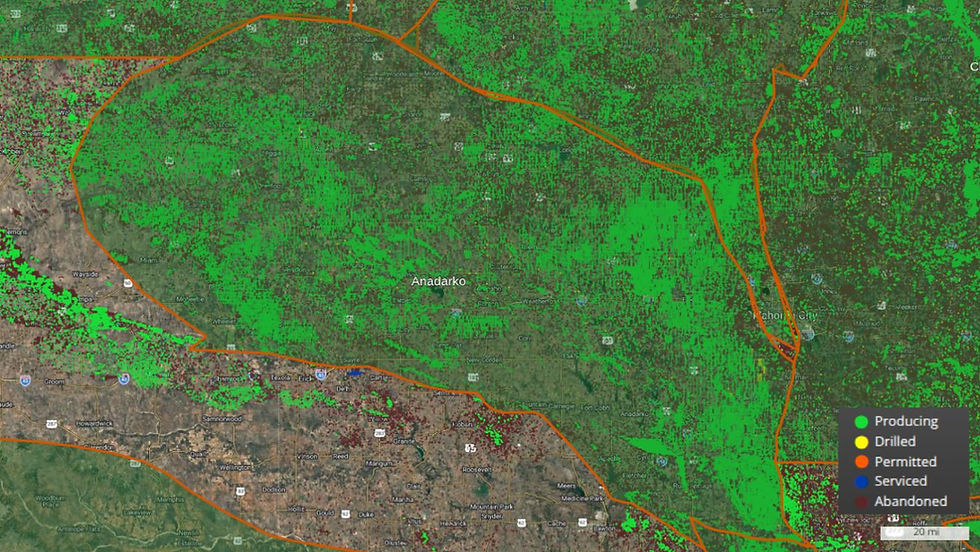
Because STACK and SCOOP acreage is stacked across multiple productive formations, operators can often drill more than one well per section, which supports stronger lease bonuses than a single-formation play would. Owners in the most active counties (where large operators like Devon, Continental, and Marathon already hold significant positions) tend to see the most competitive offers, since these companies are actively infilling and extending their existing footprints rather than exploring from scratch.
4) The Appalachian Basin - Marcellus & Utica Shale (Pennsylvania, Ohio, and West Virginia)
The fourth highest-value region for mineral rights in the U.S. is the Appalachian Basin. Home to the legendary Marcellus and Utica shale formations, this vast region stretches across the Northeast and Rust Belt, offering some of the thickest, most rock-solid natural gas reserves on the planet.
Why Mineral Rights Are Highly Valuable in the Appalachian Basin:
Unmatched Well Longevity: Wells drilled into the Marcellus and Utica shales are known for their exceptional decline curves, meaning they start with high initial production and continue producing steady, predictable gas volumes for 30 to 50+ years. For a landowner, this translates into generational royalty payments.
Rich Natural Gas Liquids (NGLs): Beyond dry natural gas, large portions of eastern Ohio, southwestern Pennsylvania, and the West Virginia panhandle yield high concentrations of "wet gas" rich in ethane, propane, and butane. These liquids fetch higher market prices, boosting the overall payout on landowner royalty statements.
Proximity to High-Demand Markets: Situated near major Eastern Seaboard cities and industrial hubs, gas produced in the Appalachian Basin enjoys direct access to high-demand markets, minimizing transport discounts.
Because so much Appalachian production is natural gas rather than oil, values here can move differently than in the Permian or Bakken Basins - tracking gas prices and pipeline take away capacity as much as drilling activity. Owners in counties with active Marcellus or Utica development, especially in the wet gas window, are seeing some of the strongest interest from buyers in the region’s history.
5) The Bakken/Williston Basin (North Dakota)
The Bakken Shale (located within the Williston Basin) transformed North Dakota into the nation’s second-largest oil-producing state during the height of the modern shale boom. Today, it remains a pillar of American oil and gas production, offering proven, highly predictable returns for subsurface asset owners.
Why Mineral Rights Are Highly Valuable in the Bakken Basin:
Light, Sweet Crude Premium: The Bakken produces exceptionally high-quality "light, sweet" crude oil. Because this type of oil requires less refining to convert into gasoline and diesel, it trades at a premium price compared to heavier grades.
Established Operational Efficiency: Operators in the Bakken have spent decades perfecting horizontal drilling and multi-stage fracking techniques in the region. This operational mastery keeps drilling costs efficient and reduces risk for mineral owners.
Steady Income Stream: While new "wildcat" exploration in the Bakken has slowed in favor of steady development, existing producing wells in core counties (like Mountrail, McKenzie, and Dunn) continue to supply mineral owners with reliable, long-term royalty income.
Developer demand for North Dakota mineral rights has stayed strong even at the federal level: in July 2026, the Bureau of Land Management held its largest oil and gas lease auction in North Dakota in 15 years, leasing all 27,290 acres offered at an average bid of $4,751 per acre, with individual parcels selling for as much as $10,402 per acre. McKenzie County - the state's top federal oil and gas producer - accounted for 88% of that sale and drew the strongest bidding, averaging $5,166 per acre.
What Makes Mineral Rights More Valuable in Some Regions?
Mineral rights value varies widely across the country. Appraisers, landmen, and other mineral buyers generally weigh proximity to active wells, local development activity, historical well production, current lease status, commodity prices, formation quality and depth, and infrastructure capacity.
Value Indicator | Why It Matters for Landowners |
Proximity to Active Wells & Local Development Activity | This is the single biggest indicator of mineral value. If an operator is successfully drilling horizontal wells within 1–3 miles of your boundary line, the probability that your minerals are in the direct path of future drilling spikes dramatically. |
Historical Well Production | High cumulative production volumes and healthy reservoir pressure in neighboring wells indicate that the rock beneath your feet is permeable and saturated with recoverable hydrocarbons. High production equals higher monthly royalty checks. |
Current Lease Status | If your mineral rights are unleased, you hold maximum negotiating leverage to secure high upfront bonus payments and favorable royalty terms. If your acreage is already producing, its value is based on the immediate, proven monthly cash flow it generates. |
Commodity Prices | Oil and natural gas prices directly affect what operators are willing to pay for a lease and what royalty checks look like. |
Formation Quality & Depth | Thick, prolific source rock (like the Permian’s stacked pay zones) supports more wells per section than thinner or shallower plays, driving higher lease and sale prices |
Infrastructure Capacity | Pipeline access and processing capacity determine whether produced oil and gas can actually get to market economically. Mineral rights near existing infrastructure with capacity are generally more valuable. |
What are My Mineral Rights Worth?
Regional trends are a helpful starting point, but mineral rights value is hyper-local - it can change from one section to the next depending on which wells are nearby and how they’ve produced over time. The fastest way to find out where your specific property stands is to pull a free Property Report on LandApp.
Every free LandApp Property Report includes:
An estimated oil & gas lease value for your property, so you have a data-backed starting point before you talk to a landman or buyer.
Nearby wells mapped around your parcel - one of the single biggest indicators of mineral value, since proximity to existing production tells you whether operators are actively developing your area.
Production history for those nearby wells, so you can see how they’ve actually performed over time, not just whether they exist.

Once you know more about your mineral rights, you can list your minerals for lease or for sale on LandApp for free and put your property in front of a nationwide network of operators, land investors, and mineral buyers with no obligation to accept any offer you receive. The best way to get the most value from the lease or sale of your mineral rights is to generate multiple competitive offers from developers, which is exactly what LandApp’s marketplace does.


